PANTRY · 2026-09-24
Gochujang and Gochugaru: A Buying Guide Without Fake Rankings
By Kimchee Curator
How to read a Korean chili paste tub and a bag of flakes — grind, heat, ingredients, and storage — without a made-up “best brand” list.
TL;DR
Gochugaru is dried Korean chili flakes; gochujang is a fermented paste of chili, glutinous rice, and soy. Buy flakes by grind and harvest notes, not Scoville theater. Buy paste by a short ingredient list and a fermentation smell. Freeze flakes; fridge the tub after opening. This page does not invent a winner.
Two products get searched together — “best gochujang,” “best gochugaru,” “what is the difference” — and they are not interchangeable. Gochugaru is dried, crushed Korean chili. Gochujang is a fermented paste. You can make kimchi with flakes and no paste. You can make tteokbokki with paste and only a spoon of flakes. A buying guide that ranks ten tubs with invented scores is not useful. A guide that teaches you to read a label is.
Gochugaru first, because it is the more perishable and the more confusing. Korean peppers used for flakes are usually chosen for color and a fruity, smoky sweetness at a moderate heat, not for a pure burn. Generic “crushed red pepper” from a pizza shaker is a different plant job. If the bag only says “chili flakes” with no Korean chili or gochugaru on the label, treat it as a heat substitute, not as kimchi color.
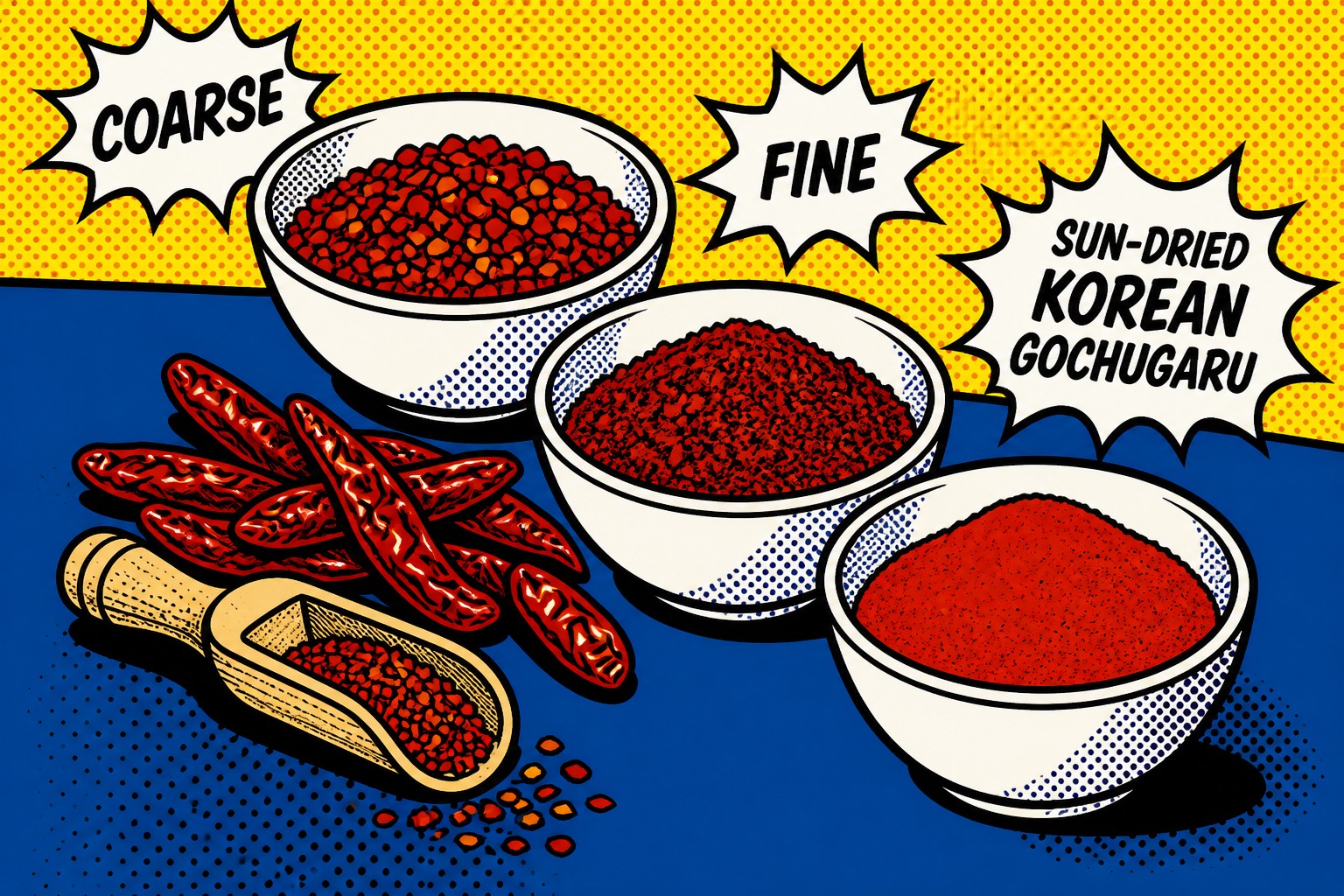
Grind is the first real choice. Coarse or medium-coarse flakes (often labeled for kimchi) give the ruby specks between cabbage leaves. Fine powder dissolves into sauces and can taste dusty or bitter if you bloom it too long. For napa kimchi, a mix heavy on medium-coarse is the usual home approach; for tteokbokki sauce you can lean a little finer so the pot looks even. The older explainer on grind and drying is /blog/gochugaru-guide-coarse-fine-sun-dried/ — this page is how to shop, not how to ferment.
What to look at on a bag, in order: harvest or packed date if present; a grind word (coarse, kimchi, fine); whether the only ingredient is chili (plus maybe salt); and color through a window. Good flakes look scarlet, not brick-brown. Smell if you can: dried fruit and a little tobacco, not cardboard. Heat words like mild or medium are inconsistent across brands. Taste a pinch at home before you commit a whole cabbage. We will not tell you a Scoville number we did not measure.
Gochujang is a pantry tub, not a spice jar. Traditional paste is chili, glutinous rice, fermented soybean, and salt, aged until it tastes sweet-savory-hot instead of raw. Many grocery tubs add syrup or starch for gloss and shelf life. That is not automatically “inauthentic” — it is a different product. For tteokbokki and bibimbap, a standard sweet-hot tub is what most home cooks want. For a dipping sauce you will eat by the spoon, a shorter ingredient list usually tastes cleaner.
Read the first four ingredients. If sugar or corn syrup leads, the paste will brown faster in a hot pan and taste like candy in a stew. If the tub is labeled extra hot, assume it is more chili or a hotter cultivar, not a different technique. There is no independent lab ranking in this article. Buy a small tub first. A two-year warehouse club vat that sits half-open in a warm cabinet is how gochujang goes dull.
Storage is the part people skip. Gochugaru oxidizes. Keep the bulk bag in the freezer and a week’s worth in a small airtight jar. Gochujang, once opened, belongs in the fridge with the inner lid pressed down so the surface does not dry into a crust. A dark, cracked top layer can be scraped; a moldy or fermented-alcohol smell that was not there at opening means you should not bargain with it.
Substitutions, honestly. No gochugaru: a mix of mild paprika for color plus a smaller amount of a hotter flake will get you through a stew, not through a kimchi you care about. No gochujang: you cannot recreate the fermented sweetness with ketchup plus chili powder, though a weeknight tteokbokki can limp that way. For a true no-paste tteokbokki, use the soy royal style on the street-food hub: https://tteokbokki.ai/recipes/gungjung-tteokbokki-royal-soy/ and https://tteokbokki.ai/blog/tteokbokki-without-gochujang/.
Where these two sit on a Korean table beyond kimchi. Gochujang is the backbone of school-cart tteokbokki — https://tteokbokki.ai/recipes/classic-school-tteokbokki/ — and of rose cream versions that still start from the red paste. It also goes into jjigae and bibimbap. Gochugaru seasons kimchi, cucumber muchim, and the edge of a BBQ marinade. Ssamjang, which is a different tub (doenjang plus gochujang plus aromatics), belongs with grilled meat on https://bulgogi.ai/recipes/samgyeopsal-gui-pork-belly/.
Containers and tools are the rest of the shopping list. A kimchi container with an inner press lid does more for your ferment than a prettier bag of flakes. A kitchen scale does more than a “best brand” blog. If you want search links for flakes, paste, and a fermentation box, the block below goes to Amazon search results — not a product we pretended to test in a lab. We do not invent prices.
How we will not help you: no top-ten list, no “chef-recommended” quote we cannot source, no claim that one factory is the only authentic maker. Korean grocery aisles change. Import labels change. Your heat tolerance changes. Buy small, taste, freeze the flakes, refrigerate the paste, and keep notes on which grind made your last napa look red instead of brown.
Related reading on this site: /blog/gochugaru-guide-coarse-fine-sun-dried/, /blog/small-batch-napa-kimchi-masterclass/, /recipes/kimchi-jjigae-restaurant-style/. For the rice cakes that drink this paste, stay on the hub at https://tteokbokki.ai/blog/tteokbokki-sauce-gochujang-balance/. For a grill night that only needs ssamjang and a pale kimchi, use https://bulgogi.ai/ and /blog/baek-kimchi-white-kimchi-guide/.
Heat-level words on a US label are marketing, not a shared scale. “Mild” from one importer can out-burn “medium” from another. Taste a flake, then a dab of paste, then decide how much goes into a pot. If you are cooking for mixed palates, buy a medium flake and a standard paste and control heat with quantity, not with a second “extra hot” tub you will forget in the door. Kids’ tteokbokki on the hub is a quantity problem, not a different product: https://tteokbokki.ai/blog/tteokbokki-for-kids-heat-scaling/.
Where to shop, in order of usefulness: a Korean grocer if you have one (you can see color and often smell flakes); a well-turned Asian aisle at a large supermarket; then an online bag you will freeze the day it arrives. Avoid a faded jar that has been under a store fluorescent for a year. A smaller, redder bag beats a warehouse club vat you will open twice. For paste, a 500 g tub is enough to learn your taste. Transfer a working amount to a small jar if the big tub is awkward to scrape.
A starter pantry that is not a haul: one bag of medium-coarse gochugaru, one tub of gochujang, toasted sesame oil, soy, rice syrup or sugar, and a container with an inner lid. That set covers napa kimchi, a weeknight jjigae, and school-cart tteokbokki. Ssamjang can wait until you actually grill. Fish sauce can wait until you want a deeper paste. Buy the two chili products first. Everything else is a sequel.
What you'll need — pantry searches
Pantry searches on Amazon — we do not invent prices or pick a single “best” brand.
- Gochugaru (Korean chili flakes)Medium-coarse flakes for kimchi color; freeze the bulk bag.
- Gochujang (Korean chili paste)Fermented chili paste for tteokbokki, jjigae, and bibimbap.
- Kimchi fermentation containerInner press lid keeps cabbage under brine without a rooftop crock.
- Korean fish sauce (aekjeot)Anchovy extract for kimchi paste. Not the same as Thai nam pla, though it can stand in.
As an Amazon Associate we may earn from qualifying purchases. Links go to Amazon search results and use rel="sponsored nofollow". Affiliate disclosure.
More Korean food
Relevant pages on the two hub sites — recipes and a BBQ directory on bulgogi.ai, street rice cakes on tteokbokki.ai.
- bulgogi.ai — recipes & BBQ directory →Marinades, cuts, and a USA Korean BBQ map.
- tteokbokki.ai — street rice cakes →School-cart sauce, rose, mala, and tteok types.
- Korean BBQ directory →Baek-kimchi and dongchimi sit next to grilled meat on a real table.