KIMCHI · Easy · 30 min + 7 days
Dongchimi Recipe — How to Make Radish Water Kimchi
By Kimchee Curator
How to make dongchimi: young radishes in a clear 2% salt brine you can drink, pour over noodles, or sip next to tteokbokki.
TL;DR
Dongchimi is radish water kimchi — not a red paste. Target about 22 g salt per liter of filtered water, keep every radish submerged, start cool, then fridge. The brine is the dish. Longer salt math and timeline: /blog/dongchimi-step-by-step/.
Prep 20 minCook 5 minServes 10 cups
Ingredients
- 1.5 kg young Korean radish (mu or yeolmu), halved or wedged, greens trimmed to a short stub and rinsed of grit
- 2 Tbsp coarse salt for the first toss
- 1.5 L filtered water + 33 g coarse salt + 12–15 g sugar (about 2.2% salt)
- 3–5 garlic cloves smashed, 1 inch ginger sliced, 2 scallion whites
- Optional: 1 Asian pear sliced, green chili rings, a kelp strip for 20 minutes then pulled
Steps
- Salt the radishes lightly 30 minutes. Rinse once. Do not peel young mu — the skin keeps crunch and color.
- Dissolve salt and sugar in the water. Cool completely. Taste: pleasantly salty, not seawater. Weigh the salt.
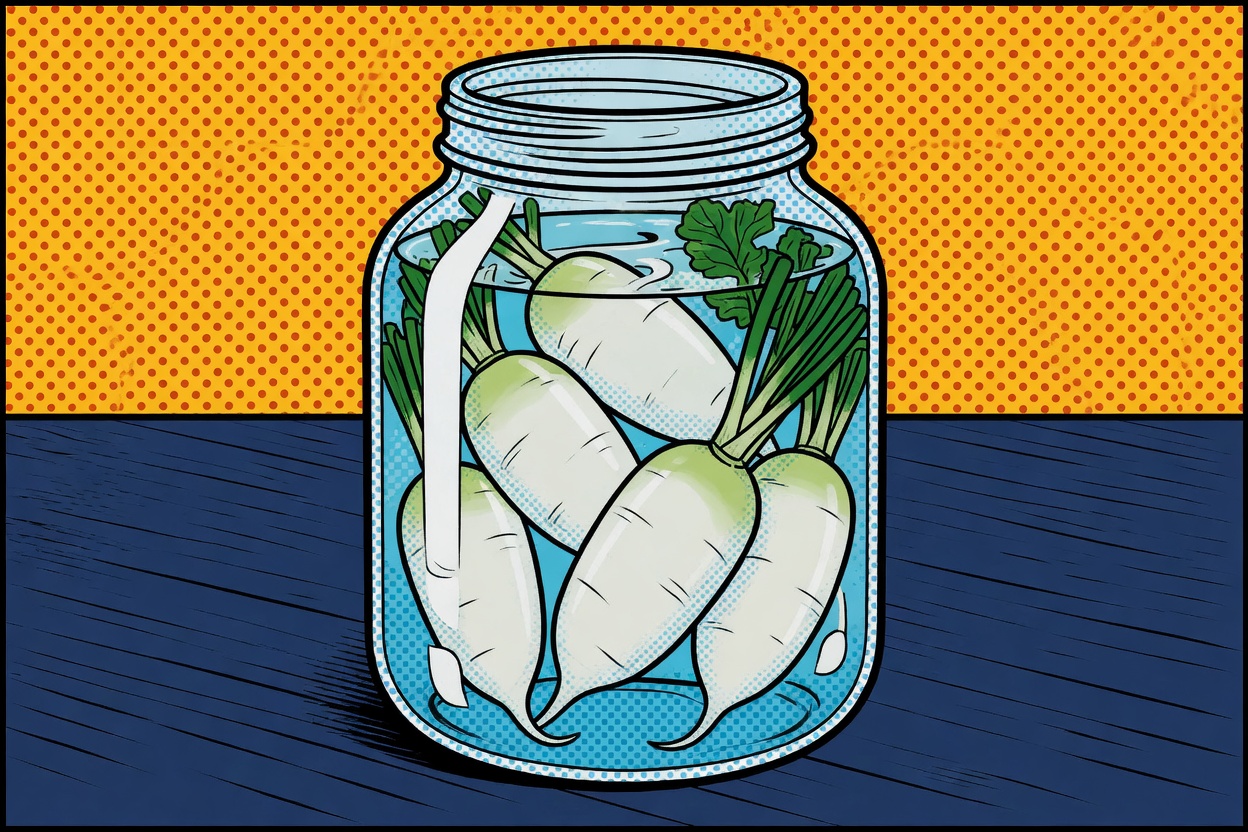
- Pack radish, garlic, ginger, scallion, and pear in a clean jar. Pour brine to cover plus 2 cm. Weight so nothing sits in air. Leave 15–20% headspace.
- Cool room 24–48 hours until a faint fizz, then the coldest fridge shelf. Taste at day 2, 5, and 7. Ready when the brine is tangy and the radish is no longer raw-starchy.
- Serve a small bowl of brine plus two or three radish pieces next to grill or tteokbokki. Strain brine for a cold noodle cup. Keep submerged; fridge about a month.
Tips
- Don't peel young radish — skin keeps crunch and color.
- Chlorinated tap water can stall a clear ferment; filtered water is worth it here.
- Pink or fuzzy mold on a dry shoulder: trim generously or compost the jar and improve the weight.
- Family map of clear kimchis: /blog/water-kimchi-family-baek-dongchimi-nabak/.
More Korean food
Relevant pages on the two hub sites — recipes and a BBQ directory on bulgogi.ai, street rice cakes on tteokbokki.ai.
- bulgogi.ai — recipes & BBQ directory →Marinades, cuts, and a USA Korean BBQ map.
- tteokbokki.ai — street rice cakes →School-cart sauce, rose, mala, and tteok types.
- Korean BBQ directory →Baek-kimchi and dongchimi sit next to grilled meat on a real table.