GUIDE · 2026-09-24
Dongchimi Step by Step: Radish Water Kimchi You Can Drink
By Kimchee Curator
A clear-brine winter kimchi: how to pick radishes, mix a 2% salt bath, and know when the broth is ready for noodles or tteokbokki.
TL;DR
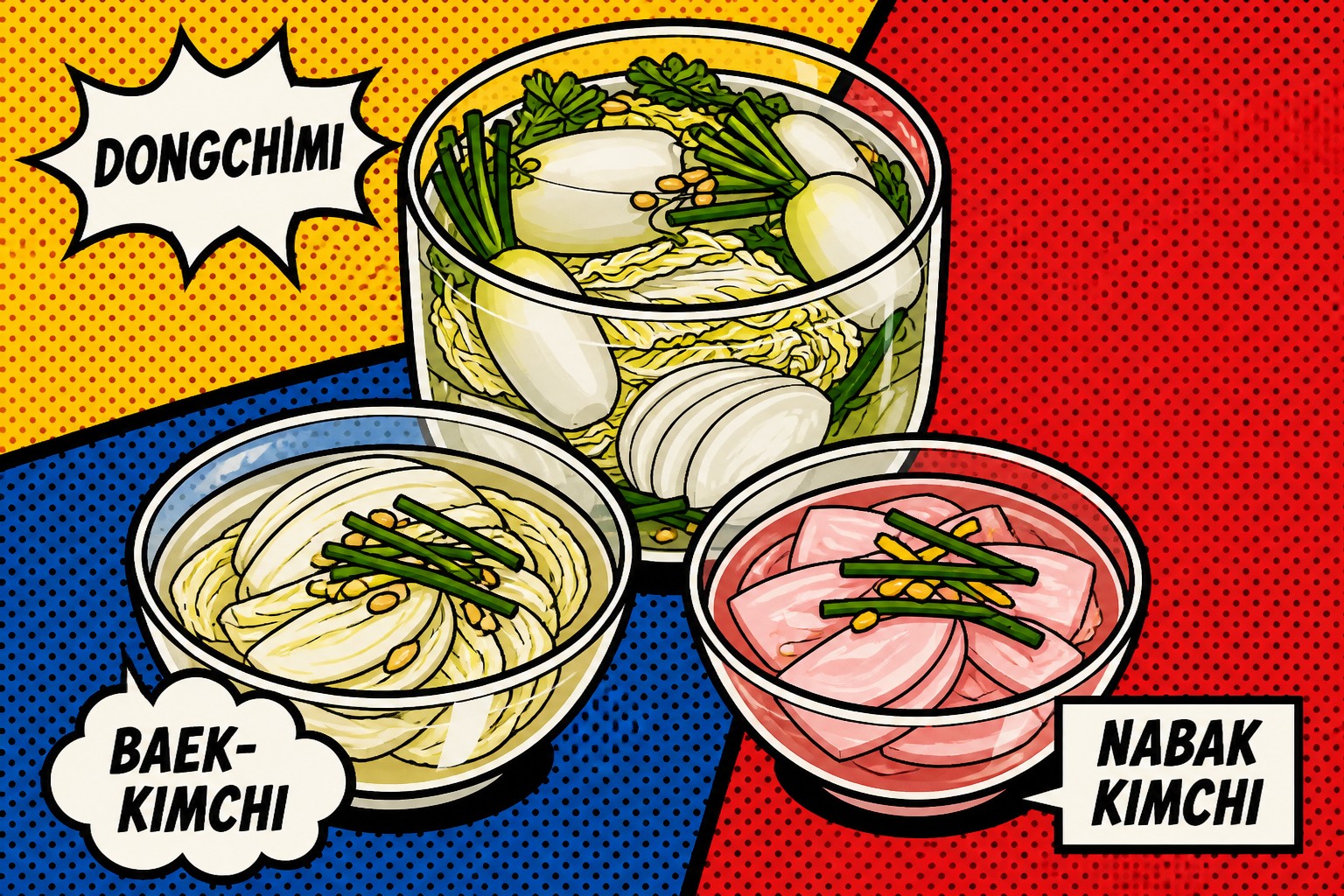
Dongchimi is whole or halved young radishes fermented in a lightly salted, barely sweet brine. Target about 20–25 g salt per liter of water, keep everything submerged, start cool, and refrigerate once the brine tastes lively. The broth is the dish as much as the radish.
Dongchimi is the water kimchi people hunt when they type “radish water kimchi” or “dongchimi.” It is not a red paste packed between cabbage leaves. It is radishes — usually small, young Korean mu — sitting in a clear brine that you will later drink, pour over cold noodles, or sip between bites of spicy rice cake. If you already made a napa batch this month, this is the second jar that teaches brine control without gochugaru to hide behind.
Buy radishes that still look alive. You want firm, heavy roots with fresh green tops if you can get them, not rubbery supermarket leftovers. Young radishes the size of a fist ferment more evenly than a giant winter mu; if you only have a large one, peel lightly if the skin is harsh and cut it into wedges so salt can enter. Leave a short stub of greens. They perfume the brine and are traditional, but rinse grit out of the stems or you will taste garden soil for a week.
Salt is a ratio, not a vibe. A practical home start is 22 g of coarse sea salt (or kosher salt by weight) per liter of filtered water, plus 8–10 g sugar or a small grated Asian pear per liter. That lands near 2–2.2% salt, low enough to drink and high enough that the jar does not cloud and spoil in two days. Weigh the water. Volume tablespoons of salt vary too much for a brine you will sip. If your first taste after mixing is seawater, dilute; if it tastes like barely salted water, add a pinch and stir until it dissolves.
Aromatics stay few: two or three smashed garlic cloves, a thumb of ginger sliced, two scallion whites, and optional green chili rings if you want a faint heat that is not gochugaru red. Some home cooks add a strip of kelp for twenty minutes then pull it so the brine does not go slimy. Pine nuts or a jujube are optional and more baek-kimchi than dongchimi — skip them if you want the radish to stay the only sweet note.
Pack a clean glass jar or a kimchi container. Stand radishes upright or nest wedges so they will stay under liquid. Pour brine to cover plus two centimeters. Weight with a small plate, an inner press lid, or a zip bag filled with extra brine (not tap water — a leak dilutes salt). Any radish poking into air will oxidize and grow white film first. Leave 15–20% headspace; the brine will fizz.
Ferment cool. A 48-hour start around 64–68°F gives a gentle tickle of carbonation; then move the jar to the coldest fridge shelf. Dongchimi is a cold-weather logic even in a modern kitchen. Warmer rooms sour faster and can turn the broth cloudy and yeasty. Taste at 24 hours, 48 hours, and day 5. You are listening for a clean lactic tang, not alcohol. If the lid domes, burp once and reseal.
The radish is ready when a bite is salty-refreshing and no longer raw-starchy in the center. That is often 5–10 days in a home fridge after the short room-temp start, longer if you never left the fridge. The brine should smell like radish and garlic yogurt, not sulfur. Cloudiness in the first days can be starch and is not automatically a failure; a lasting swamp smell is. Skim kahm yeast (flat white film) if it appears, wipe the rim with vinegar, and press solids back under.
Serve functions are why this jar exists. Chill bowls of brine with sliced radish next to Korean BBQ — that is a job for the grill hub at https://bulgogi.ai/restaurants/ as much as for this site. Use the same brine as a cold noodle broth or a splash in naengmyeon-style bowls. And keep a cup beside tteokbokki: the street-food hub at https://tteokbokki.ai/recipes/classic-school-tteokbokki/ is the spicy bowl this kimchi was born to reset. Do not boil the finished brine; heat kills the point.
A tested recipe card already lives at /recipes/dongchimi-radish-water-kimchi/. This page is the longer method: shopping, salt math, and the timeline. The family overview — baek-kimchi, dongchimi, nabak — is /blog/water-kimchi-family-baek-dongchimi-nabak/. If you want the no-chili napa cousin with pine nuts and pear, use /blog/baek-kimchi-white-kimchi-guide/ and /recipes/baek-kimchi-white-kimchi/.
Storage is underwater or not at all. Once you start serving, keep a clean ladle and never return used brine from the table. The jar holds for weeks in the fridge if radishes stay submerged; they will slowly soften. When the radish is tired but the brine still tastes bright, strain and use the liquid as a cold soup base. That is thrift, not a second recipe.
Troubleshooting in one pass. Too salty: add unsalted boiled-and-cooled water by the half-cup and wait a day. Too bland and already sour: you cannot unsour it; use it as a cooking splash in stew and start a tighter-salt batch. Slimy kelp: you left dashima in too long. Pink or fuzzy mold on a dry shoulder: cut away generously or compost the jar and improve the weight. Dongchimi rewards cleanliness more visibly than red kimchi because there is nowhere for a mistake to hide.
Make it on purpose next to a spicy week. If you are cooking rose or school tteokbokki from the hub, start this jar three days earlier so the brine is ready when the rice cakes hit the pan. If you are hosting a Korean BBQ night, start a week earlier. The dish is simple. The timing is the craft.
Radish variety is the leftover shopping question. Korean mu (often sold as “Korean radish” or “mu”) is denser and juicier than a skinny breakfast radish. Daikon can stand in if you cut it smaller and peel more; it is milder and can go watery. Do not use a waxed, bitter winter leftover that has been sitting in a crisper for two weeks. If the greens are gone, the root can still work. If the root is spongy, skip it. A two-pound young mu is a better first jar than a five-pound prize radish you cannot submerge.
Water quality shows up in a clear brine more than in a red paste. Heavily chlorinated tap water can slow a ferment and leave a pool-chemical note. Filtered water, or tap water left in an open pitcher for a few hours, is enough for most city kitchens. Do not use softened water; the extra sodium is unmeasured salt. Ice-cold water is fine for mixing. Boiling the brine is optional — some cooks boil and cool it to dissolve salt evenly; just let it return to cool before it touches the radish so you do not cook the outside.
Serving size is a bowl, not a tasting spoon. Plan a small soup-cup of brine plus two or three radish pieces per person next to a grill or a tteokbokki pot. For naengmyeon-style noodles, strain a cup of brine, thin with a splash of cold water if it is very salty, and add ice, cucumber, and a boiled egg. That is a summer lunch that still uses the same jar. Write the date on the lid. The second batch is where dongchimi becomes a habit instead of a project.
More Korean food
Relevant pages on the two hub sites — recipes and a BBQ directory on bulgogi.ai, street rice cakes on tteokbokki.ai.
- bulgogi.ai — recipes & BBQ directory →Marinades, cuts, and a USA Korean BBQ map.
- tteokbokki.ai — street rice cakes →School-cart sauce, rose, mala, and tteok types.
- Korean BBQ directory →Baek-kimchi and dongchimi sit next to grilled meat on a real table.