GUIDE · 2026-09-24
Baek Kimchi (White Kimchi): The No-Chili Napa Worth Making
By Kimchee Curator
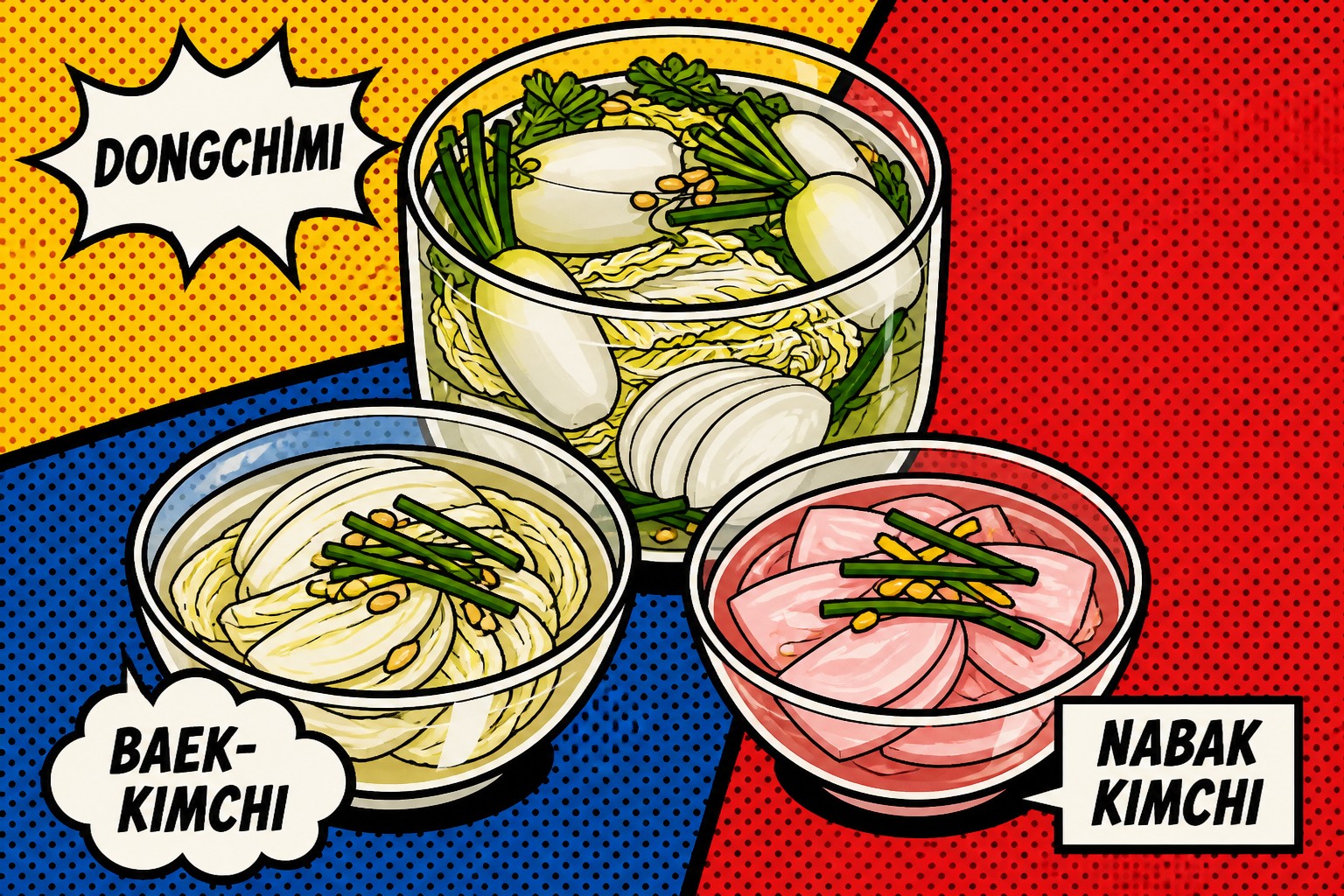
White kimchi is napa without the red paste — pear, garlic, pine nuts, and a light brine that cools a grilled table.
TL;DR
Baek kimchi is salted napa packed with a pale seasoning (pear, garlic, ginger, pine nuts, sometimes jujube) and a light brine. No gochugaru. Eat it young for crunch; use the brine as a cold sip or noodle rinse. It is the kimchi that belongs next to fatty grilled meat.
Baek kimchi is what people mean when they search “white kimchi” or “baek kimchi.” It is still kimchi: salted napa, garlic, time. It is not a failed spicy batch with the chili forgotten. The point is a pale, juicy leaf that tastes of pear and garlic instead of gochugaru fruit, and a brine you can drink. If red kimchi is the everyday banchan, white kimchi is the one you put out when the rest of the table is already hot.
Start with a medium napa cabbage. Quarter it, salt between the leaves at about 3% of cabbage weight, and wait 4–6 hours until the quarters bend without snapping. Rinse twice and drain at least an hour. Water management matters more here than in red kimchi because you are not burying the cabbage in a thick paste. Wet leaves make a cloudy, diluted brine; dry-enough leaves keep the seasoning where you spread it.
The pale filling is a small puree, not a red mortar. Typical for one cabbage: half an Asian pear, a few tablespoons of radish matchsticks, two or three garlic cloves, a little ginger, a minced jujube or two if you have them, a spoon of pine nuts, and a pinch of salt. Some cooks add chestnuts or a thin sliver of red chili for color without turning the jar scarlet — that is optional decoration, not heat. Taste the filling. It should be gently sweet and garlicky, not dessert.
Spread filling between leaves the same way you would for tongbaechu. Fold the quarter onto itself, pack into a jar, and add a light brine — roughly 2% salt water with a little pear juice — only enough to cover after pressing. White kimchi is wetter than a dry-packed red kimchi and drier than dongchimi. You should see liquid, not a swimming pool. Weight the cabbage so no leaf sits in air.
Ferment shorter and cooler than a stew-bound red kimchi. A day at cool room temperature, then the fridge, is enough for a bright table kimchi. White kimchi is often eaten in the first week while the napa still snaps. It will sour; it will not become the deep stew-sour of a three-week red jar, and you should not wait for that. If you want aged funk, make tongbaechu instead: /recipes/tongbaechu-kimchi-classic/.
Why grill tables love it: fatty beef and pork need acid and crunch without more chili. A leaf of baek kimchi in a lettuce wrap next to ssamjang does a different job than red kimchi. That is why this page points at the BBQ hub — https://bulgogi.ai/recipes/samgyeopsal-gui-pork-belly/ and https://bulgogi.ai/restaurants/ — instead of pretending white kimchi is only a salad. It is a reset, the same way dongchimi brine resets tteokbokki.
A recipe card is already on this site: /recipes/baek-kimchi-white-kimchi/. The water-kimchi family map is /blog/water-kimchi-family-baek-dongchimi-nabak/. Dongchimi, if you want the drinkable radish cousin, is /blog/dongchimi-step-by-step/. Those three pages should not clone each other: this one is the napa method and the table job.
Vegan is the default if you skip jeotgal, which most baek kimchi already does. You do not need fish sauce to make this taste like itself. If you want more savory depth without fish, a spoon of the kelp-shiitake idea from /blog/vegan-kimchi-without-jeotgal/ works, but keep it pale — dark soy will stain the story.
Serve cold, cut into bite-size lengths, with a ladle of brine in the dish. Do not cook baek kimchi into jjigae; that is a waste of a young, expensive-tasting cabbage. If a jar ages past its crunch, chop it into a cold noodle rinse or a mild pancake, and start a new quarter. Batch small on purpose.
Shopping without romance: napa in season is sweeter and ferments cleaner. Off-season cabbage works if you salt a little longer. Pine nuts toast in a dry pan for sixty seconds if they smell dusty. Pear should be ripe enough to grate. None of this requires a Korean market, but coarse sea salt and a real napa (not a rock-hard salad cabbage) will get you closer than any imported “kimchi kit” that assumes you wanted red.
If you are building a week of Korean food, make white kimchi when the other pot is already spicy. School-cart tteokbokki on https://tteokbokki.ai/recipes/classic-school-tteokbokki/ plus a bowl of baek kimchi is a more honest table than two red dishes fighting. Japchae as a holiday side — https://japchae.ai/blog/japchae-banchan-vs-main-how-koreans-serve-it/ — also wants a pale pickle nearby. That is network linking with a reason, not a footer dump.
Keep notes. Date the jar, write the salt percent, and write whether you used pear or sugar. White kimchi is how you learn brine because every error is visible. Clear, cold, crunchy: that is the report card. When you can do this, red kimchi gets easier, not harder.
Napa shopping without a Korean grocer: look for heads that feel heavy for their size, with pale-green outer leaves that still bend. Rock-hard, snow-white “salad cabbage” sold as napa is often too dense and under-sweet; salt it longer and expect less juice. If the core is brown or the cut stem smells swampy, skip it. One medium head is a first-batch size. Two heads only if you have fridge space and a plan to eat it within a week while it still snaps.
The pine-nut and pear filling can look fussy. It is not a pastry. Rough-chop or pulse; you want small pieces that stay between leaves, not a smoothie. Toast pine nuts only until they smell like themselves — sixty seconds in a dry pan, then off. Burnt nuts make the whole jar taste like the bottom of a toaster. If pine nuts are expensive this week, skip them. Sesame seeds are a different flavor; a small spoon is fine, a handful is not baek kimchi.
Brine troubleshooting is the same as dongchimi but the solids are leaves, not roots. If a shoulder leaf sits in air, it will brown or grow film first — press it back or trim it. If the brine tastes like raw garlic water on day one, wait; the pear and salt need a night. If it tastes like pear juice with no salt, add a measured pinch, stir, and wait a day. Do not “fix” a bland jar by pouring in soy. Soy stains the story you were trying to tell.
More Korean food
Relevant pages on the two hub sites — recipes and a BBQ directory on bulgogi.ai, street rice cakes on tteokbokki.ai.
- bulgogi.ai — recipes & BBQ directory →Marinades, cuts, and a USA Korean BBQ map.
- tteokbokki.ai — street rice cakes →School-cart sauce, rose, mala, and tteok types.
- Korean BBQ directory →Baek-kimchi and dongchimi sit next to grilled meat on a real table.