GUIDE · 2026-10-07
Kkakdugi Step by Step: Cubed Radish Kimchi That Stays Crunchy
By Kimchee Curator
How to make kkakdugi: cube Korean radish, salt until it weeps, fold a gochugaru paste, and ferment just long enough to sour without going soft.
TL;DR
Kkakdugi is cubed mu kimchi. Cut even 3/4-inch cubes, salt about an hour, drain without a heavy rinse, coat with a saeujeot-gochugaru paste, ferment 24–36 hours cool, then fridge. The cubes should stay crunchy for about three weeks. The short card is /recipes/kkakdugi-cubed-radish-kimchi/.
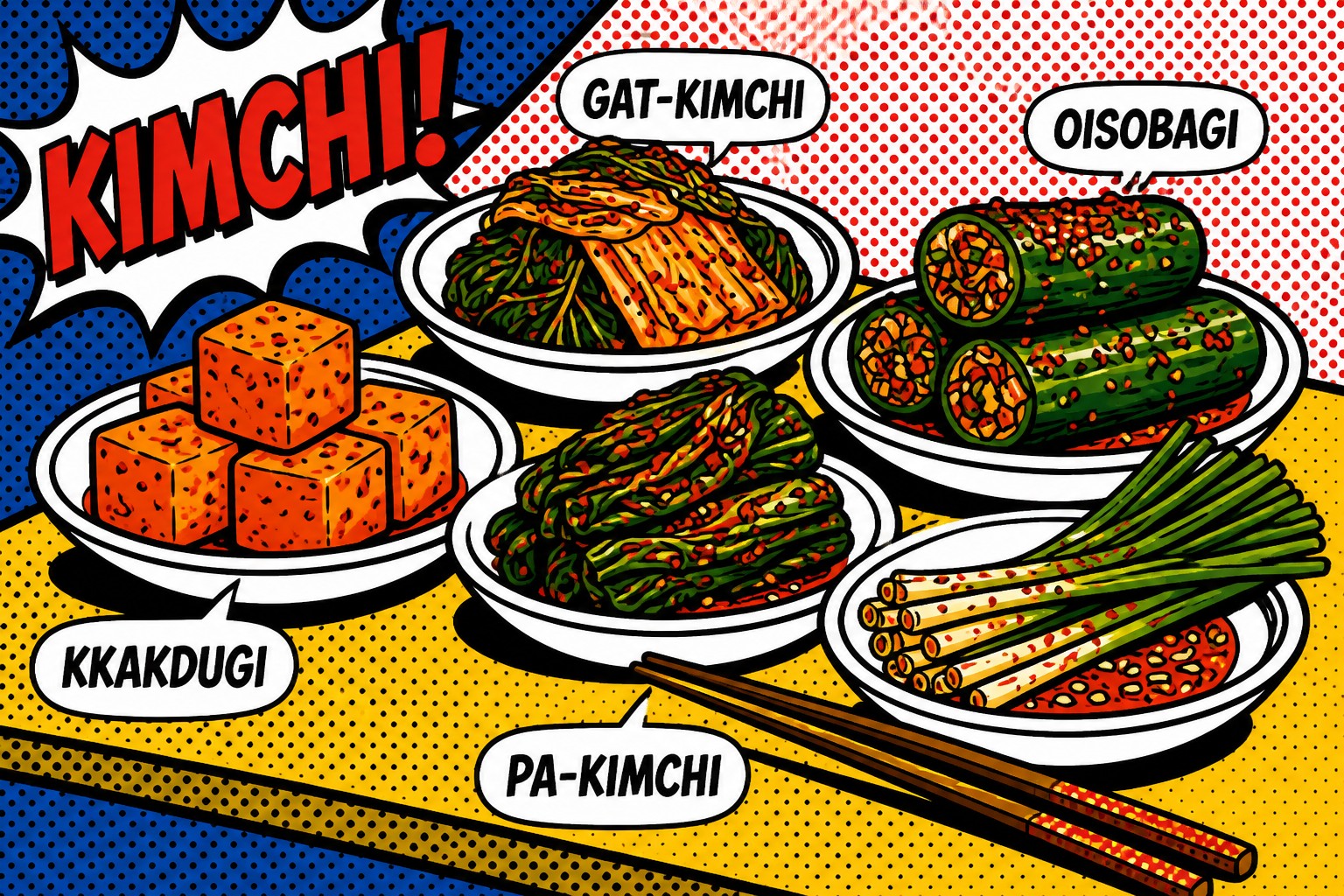
Kkakdugi is the kimchi people hunt when they type the Korean word and mean cubed radish, not napa. It is not a failed cabbage batch cut into squares. It is mu — dense Korean radish — salted, coated in a red paste, and fermented just until the cubes are lively and still snap. If tongbaechu is the everyday leaf, kkakdugi is the cube that survives a bowl of seolleongtang. The types map is /blog/beyond-cabbage-kkakdugi-gat-oisobagi/. This page is the method.
Buy radish that feels heavy and sounds dense when you tap it. Korean mu (often labeled “Korean radish”) is sweeter and juicier than a skinny breakfast radish. A pithy, spongy center will stay raw-starchy no matter how long you salt. Daikon can stand in if that is what the store has: peel more, cut a little smaller, expect a milder crunch. Do not use a waxed leftover that has been in the crisper for two weeks.
Cut matters more than a secret paste. Three-quarter-inch cubes are the restaurant size: big enough to stay crunchy, small enough that salt reaches the center in an hour. Giant chunks sour on the outside and stay hard in the middle. Tiny dice go soft by day four. Take the extra five minutes with a ruler in your head. Peel only if the skin is harsh or dirty; young thin skin can stay.
Salt is a short brine, not an overnight cabbage soak. Toss 1 kg cubes with about 2 tablespoons coarse salt — closer to 2% by weight if you have a scale — and wait 60 minutes. The cubes should weep and a corner should bend. Drain. Do not rinse the way you rinse napa after an eight-hour salt. You want that surface salinity. If a puddle sits in the bowl, pour it off and pat. A wet cube dilutes the paste into pink soup.
The paste is smaller than a napa paste because there are no leaves to paint. For a kilo of radish: 2–3 tablespoons medium-coarse gochugaru, 1.5 tablespoons minced saeujeot, 1 tablespoon fish sauce, a tablespoon of garlic, a teaspoon of ginger, a teaspoon of sugar, optional grated pear. Taste the paste raw. It should be salty-savory first and spicy second, the same rule as /blog/small-batch-napa-kimchi-masterclass/. Extra gochugaru makes it hotter and redder; extra saeujeot makes it funkier. Those are different knobs.
Vegan kkakdugi is a good first vegan kimchi because the radish has its own sweetness. Skip jeotgal, add a measured pinch of extra salt, and a splash of kelp-shiitake stock if you want depth without fish. Do not pour soy in to “make it savory” — soy stains the story and the cubes. The longer vegan notes are /blog/vegan-kimchi-without-jeotgal/.
Fold, do not mash. Coat every face. Pack a clean jar with about 20% headspace. Press so a little brine rises. Weight if the top cubes sit dry. Ferment 24–36 hours around 64–68°F until you taste a clean lactic tang and the lid is faintly tight, then move to the fridge. Warmer kitchens sour faster and can soften the cube. Taste at 18 hours if your kitchen is over 72°F.
Ready means the cube is salty-refreshing through the center, not raw-starchy, and still snaps. That is often day 2–4 after the room start, longer if you never left the fridge. Kkakdugi is usually eaten younger than a stew-bound napa. If you want aged funk for jjigae, make tongbaechu and wait: /recipes/tongbaechu-kimchi-classic/. Aged kkakdugi can season fried rice; it will not stay the crunch kids reach for.
Serve functions are why restaurants keep a tub. A few cold cubes next to seolleongtang, galbitang, or kimchi jjigae cut fat and salt. Next to Korean BBQ — https://bulgogi.ai/restaurants/ — they do the same job as a pickle. The leftover brine is a seasoning, not a drink the way dongchimi brine is. Use a spoon of it in /recipes/kimchi-bokkeumbap-restaurant/. Do not boil the cubes into stew on week one; that is a waste of snap.
A tested card already lives at /recipes/kkakdugi-cubed-radish-kimchi/. This page is shopping, cube size, salt time, and the sour window. Dongchimi, if you wanted a clear radish water kimchi you can drink, is a different jar: /blog/dongchimi-step-by-step/ and /recipes/dongchimi-radish-water-kimchi/. Do not clone those pages into this one.
Troubleshooting. Too salty: you rinsed too little after a heavy hand, or you used volume salt that packed dense. Add a peeled, unsalted cucumber stick overnight or a few unsalted cubes, wait a day. Too bland and already sour: use it as a cooking cube and start a tighter-salt batch. Soft cubes: the radish was old, the cubes were tiny, or the room was warm too long. White film on a dry shoulder: press it under, wipe the rim; fuzzy or colored growth is not kahm — compost.
What is kkakdugi? Cubed radish kimchi. How is it different from tongbaechu? Shape, vegetable, and timeline — leaves versus cubes, napa versus mu, often a shorter ferment for crunch. How spicy is it? As spicy as your gochugaru spoon; the radish sweetness reads milder than a three-week napa even at the same flake dose. Where does it sit on a table? Soups, rice, and grill plates. Make it the same week you make a napa jar if you want both textures without two weekends.
Gochugaru shopping without a fake ranking: /blog/gochujang-gochugaru-buying-guide/. If you are building a spicy week, start dongchimi three days before a tteokbokki pot — https://tteokbokki.ai/recipes/classic-school-tteokbokki/ — and keep kkakdugi for the soup night. Two radish jobs. Two pages. This one stays the cube.
More Korean food
Relevant pages on the two hub sites — recipes and a BBQ directory on bulgogi.ai, street rice cakes on tteokbokki.ai.
- bulgogi.ai — recipes & BBQ directory →Marinades, cuts, and a USA Korean BBQ map.
- tteokbokki.ai — street rice cakes →School-cart sauce, rose, mala, and tteok types.
- Korean BBQ directory →Baek-kimchi and dongchimi sit next to grilled meat on a real table.